Downloading KanexPro software and firmware safely
How KanexPro checks firmware and software downloads, how to verify a file's SHA-256 fingerprint, what the Windows SmartScreen warning means, and…


AV distribution is shifting from dedicated hardware matrix switchers to software-defined AV over IP. This white paper gives systems integrators a framework for evaluating which architecture is right for each application.
A matrix switcher has fixed inputs and outputs in a crosspoint fabric. Any input routes to any output. Routing is hardware-switched and instantaneous.
Strengths: Zero latency. No network dependency. Simple infrastructure (HDMI cables only). Single-vendor accountability. Proven reliability.
Limitations: Fixed I/O — upgrading means replacing the chassis. HDMI limited to 5m passive, requiring HDBaseT extenders for longer runs. Every display needs a dedicated cable run. Hardware failure is a single point of failure.
Sources connect to encoders that packetize video as IP streams. Displays connect to decoders. The managed Ethernet switch is the routing fabric.
| Codec | Quality | Latency | Bandwidth | Network |
|---|---|---|---|---|
| JPEG2000 | Visually lossless | ~1 frame | 1G link per endpoint | 1G managed |
| H.265 | Lossy | 16-67ms | 8 Mb/s main + 1 Mb/s sub per 1080p encoder (defaults) | 1G managed |
| SDVoE | Uncompressed | Zero-frame | 10G link per endpoint | 10G managed |
Strengths: Unlimited scalability (add one decoder per display). Distance via CAT6a to 100m or fiber to kilometers. Multicast delivers one stream to unlimited decoders at no extra bandwidth. Single device failure does not affect other paths. Software-defined routing with no rewiring.
Limitations: Requires correctly configured managed switch — IGMP snooping, MTU 9000 (JPEG2000/SDVoE), flow control disabled, VLAN isolation recommended. Misconfiguration causes total failure. Latency (except SDVoE). Compression (except SDVoE).
| Scenario | Recommended |
|---|---|
| Broadcast / live production | SDVoE or traditional matrix (zero latency required) |
| Corporate AV, 4-16 displays, single floor | Traditional matrix (no IT dependency) |
| Large campus, 20+ displays across floors | AV over IP / JPEG2000 (leverages existing network) |
| Digital signage, 10-100 displays | AV over IP / H.265 (multicast efficiency at scale) |
| Video wall, 9+ panels | AV over IP / JPEG2000 (9x9 wall built in) |
| Healthcare / medical imaging | SDVoE or traditional matrix (lossless required) |
| Sports bar / hospitality, 20-60 displays | Flex Matrix or AV over IP |
| Education, 1:many distribution | AV over IP / H.265 (campus-wide multicast) |
The most common AV over IP failure mode is network misconfiguration. Before specifying AV over IP, integrators must either develop network competency or establish a reliable IT partnership. Critical requirements: IGMP snooping enabled per VLAN, IGMP querier on the AV VLAN, unregistered multicast traffic filtered (dropped), MTU 9000 for JPEG2000/SDVoE, flow control disabled, dedicated AV VLAN recommended. Size uplinks at 10G for JPEG2000 deployments with multiple streams per segment.
Small (8x8): Traditional matrix is typically the better fit. The network configuration AV over IP depends on is rarely justified for a boardroom.
Medium (16x24): The two architectures are closely matched. AV over IP gains where managed Ethernet already exists, and CAT6a home runs to a switch replace HDBaseT extender runs.
Large (24+ in, 36+ out): AV over IP generally wins. The 37th output is one more decoder and switch port, versus a new or larger chassis for the traditional matrix. The scalability advantage compounds at scale.
AV over IP: JPEG2000 series (AVO-IPJP2K-ENC/AVO-IPJP2K-DEC, AVO-IPJP2KS-ENC/AVO-IPJP2KS-DEC, AVO-IPJP2KD-ENC/AVO-IPJP2KD-DEC, AVO-IPJP2KUC-ENC) | H.265 series (AVO-IP265-4K, AVO-IP265HD-ENC, AVO-IP265HD-DEC) | SDVoE (AVO-IPSDV-4K) | IP Controllers (AVO-IPCTL-JP2K, AVO-IPCTL-265, AVO-IPCTL-265HD, AVO-IPCTL-SDV)
Modular Matrix: FLEX series (FLEX-MF8X10, FLEX-MF16X20, FLEX-MF24X36, FLEX-MF24X60) with HDMI and CATx card options
AV over IP vs. matrix has no universal answer. Scale, latency, signal quality requirements, existing infrastructure and IT environment all drive the decision. Integrators who can competently specify both architectures and articulate the tradeoffs clearly will close more business and deliver better outcomes than those committed to a single approach.
Above 16 outputs or in deployments with existing Ethernet infrastructure, AV over IP typically offers more flexibility and simpler expansion. For broadcast, medical, small-scale corporate, and latency-sensitive applications, traditional matrix switching or SDVoE remains the right choice.
How KanexPro checks firmware and software downloads, how to verify a file's SHA-256 fingerprint, what the Windows SmartScreen warning means, and…
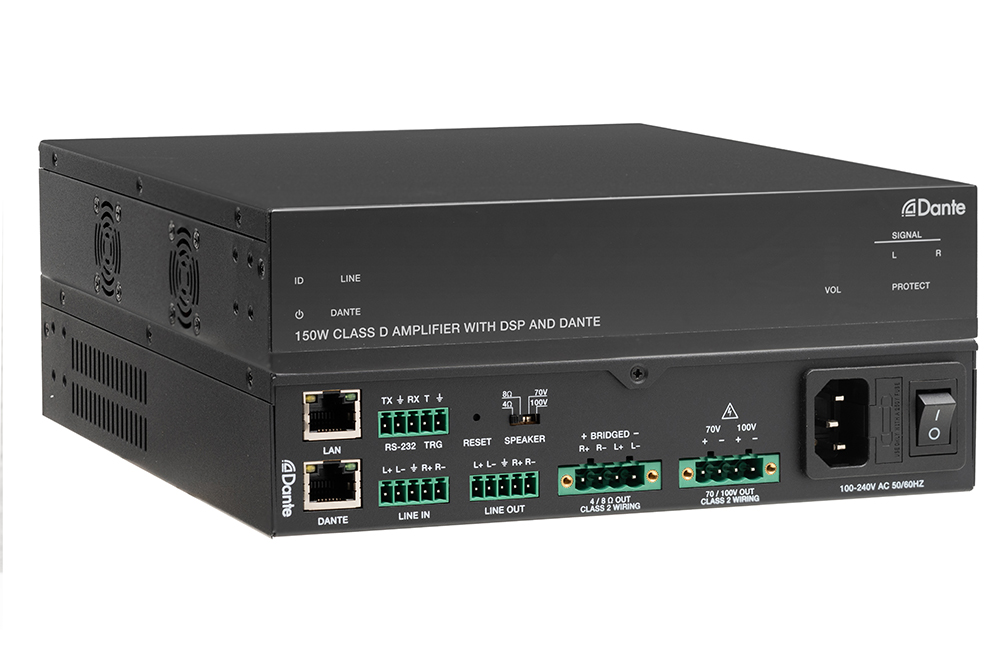
Boardrooms, conference rooms, campuses, lobbies — real-world deployment scenarios Corporate AV is among the most practical deployment target for…
Setup Guide Configuring Your Network Switch for Dante Required switch settings for all KanexPro AUD-DTE- Dante products Dante requires a managed…
KanexPro sells direct to dealers, resellers, installers and integrators, and through distribution. Whichever way you buy, the same engineers answer the phone.
The trade store: your own account, live stock, reordering, and a first look at new products.
Go to the trade store →Distribution and authorised resellers across the US and beyond.
See where to buy →Design help on extenders, matrix and AV over IP before you spec it.
Ask an engineer →