KanexPro AV Technology Enhances Community Communications at Schools Boardroom
A Flexible Place for Meetings, Classes, and Professional Growth In today's fast-paced world, both schools and communities need to communicate…



When it comes to broadcasting live events or even streaming for home entertainment purposes, there are a variety of options for transmitting audio and video signals. Two of the most common methods of streaming from the source to the streaming device include HDMI (also known as "high definition multimedia interface") and SDI (also known as "serial digital interface"). Both options are beneficial and provide different features. You may wonder, HDMI versus SDI: What's the difference? Below you will find more information about both options.
Technology continues to advance, leaving so much room for growth when it comes to educating yourself on the topic. You have likely heard of both HDMI and SDI, but may wonder what the difference is. HDMI is a consumer-focused option as it is often found on lower-end cameras and production equipment. However, SDI connections are often found on higher end equipment which is why they are often used by industry professionals. Consider a closer look at the differences between the two below.
SDI cables are commonly used in professional broadcasting industries as they can transmit high-quality videos. It can send uncompressed digital video signals between cameras, switchers, monitors, routers, and other types of video equipment. These are highly effective during live broadcasts because they offer high video quality with low latency. There are a number of different types of SDI cables, including SD-SDI, HD-SDI, 3G-SDI. These offer different resolutions and benefits.
SDI cables offer a number of benefits.
HDMI cables are mostly designed for consumer electronics. They can transmit both audio and video using just one cable. They are most often used to connect a source, such as a gaming console or streaming device to a television or other display. There are a number of different HDMI cables, including standard HDMI, mini-HDMI, and micro-HDMI. Each offers different features to meet your unique needs.
HDMI cables offer a number of benefits.
An HDMI to SDI converter converts an HDMI signal to an SDI signal. This provides you with the opportunity to connect an HDMI device to an SDI device. HDMI to SDI converters offer adjustments for the signal's resolution and frame rate. These are useful in a number of applications, including professional video editing, video broadcasting, and live productions.
If you need to convert an HDMI signal to an SDI signal, the team at Kanex Pro can help. They are skilled in Kanex Pro audio visual systems and can provide their expertise no matter what your setup is. They carry a complete selection of products related to your audio and visual connection needs. Their products are both reliable and affordable so contact the team at Kanex Pro today for support!
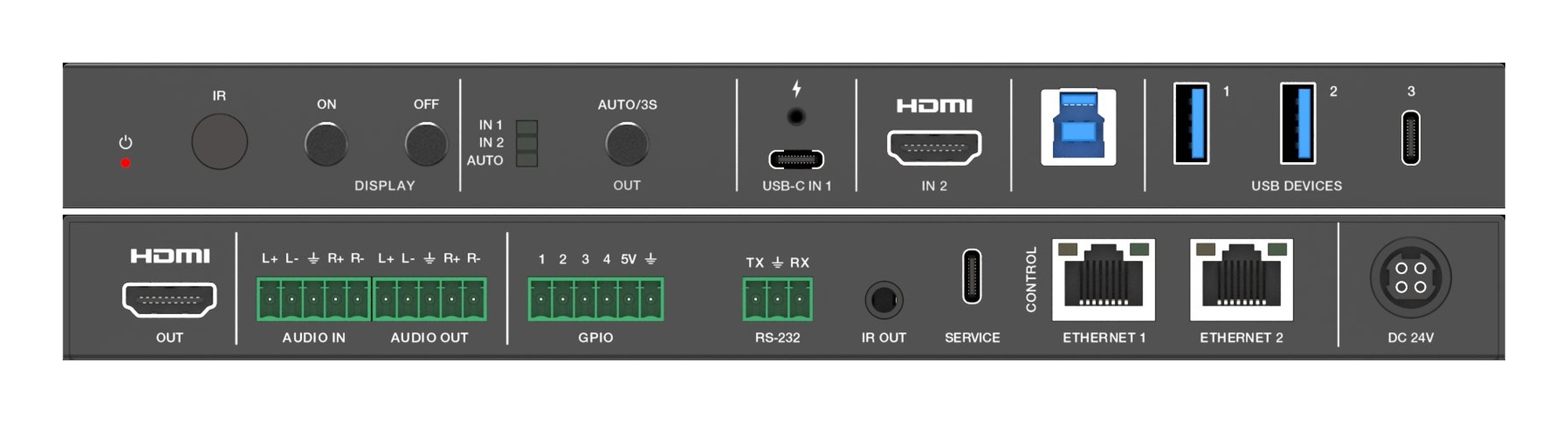
A Flexible Place for Meetings, Classes, and Professional Growth In today's fast-paced world, both schools and communities need to communicate…

An HDMI to SDI converter lets HDMI devices feed SDI switchers, recorders and monitors over long, locking coax runs. Key features and return-feed tips.
HDMI Cables are often an integral part of a home or office electronic setup. This is because they have dramatically improved the experience due to…
KanexPro sells direct to dealers, resellers, installers and integrators, and through distribution. Whichever way you buy, the same engineers answer the phone.
The trade store: your own account, live stock, reordering, and a first look at new products.
Go to the trade store →Distribution and authorised resellers across the US and beyond.
See where to buy →Design help on extenders, matrix and AV over IP before you spec it.
Ask an engineer →