HDMI Distribution System Design: Splitters, Matrices, Scalers and Dante
Specifying an HDMI Distribution System: Splitters, Matrices, Scaling Switchers and Dante Audio Short answer: Choose the device by the shape of the…


It's hard to know which display connection to use in 2026. Understanding the differences between HDMI, DisplayPort, and USB-C is crucial as technology advances, offering higher resolutions, faster refresh rates, and the capacity to operate multiple devices.

This article will help you choose the ideal connection for your needs, whether you're setting up a gaming system, an office workstation, or digital signage or using 100 Ft HDMI Cables for long-distance deployments.
HDMI (High-Definition Multimedia Interface) is still the most popular way to connect displays around the world. HDMI is omnipresent, from TVs and video game consoles to laptops and projectors.
Main Benefits:
• It is compatible with HDMI 2.1 and higher, capable of supporting up to 8K resolution.
• One cable for both audio and video
• Great for TVs, home theaters, and meeting rooms
• Works well with a lot of different devices
People often utilize 100 ft HDMI cables to set up things like schools, auditoriums, or businesses that are far away. But if you utilize low-quality or inactive HDMI cables, the signal can get worse over extended distances.
Best For:
• Systems for entertainment at home
• Consoles for gaming
• High-quality 100-foot HDMI cables are used for long cable runs.
• Presentations for business
DisplayPort is often the best choice for computers and games that need a lot of power. When you compare DisplayPort with USB-C, DisplayPort usually has a higher bandwidth and better support for high refresh rates.
Main Benefits:
• Higher refresh rates, like 144Hz, 240Hz, and higher, are best.
• Allows you to connect numerous monitors in a daisy chain
• Great for displays used for work and gaming
• More stable at higher resolutions
An active DisplayPort cable is best for longer connections. Active cables make the signal stronger, so they work well over long distances without losing quality.
Best For:
• Computers for gaming
• Setups with more than one monitor
• Displays with a high refresh rate
• People who work in the arts
USB-C is quite popular since it can carry power, data, audio, and video all at once over a little connection. A lot of new computers, tablets, and smartphones use USB-C to send video to a screen.
But when you talk about DisplayPort vs. USB-C, you should know that USB-C commonly employs DisplayPort Alt Mode within. This means that USB-C can send DisplayPort signals, but how well it works depends on the device.
Main Benefits:
• One cable for power and display
• Setup is clean and simple.
• Great for docking stations
• Used a lot in recent laptops
Limitations:
• Some USB-C ports don't support video.
• The amount of bandwidth changes from device to device.
• May not work with HDMI cables that are 100 feet long or longer.
Best For:
• Laptops and MacBooks that are new
• Setups for working from home
• Station for docking
• Very little cable management
Feature | HDMI | DisplayPort | USB-C |
Max Resolution | Up to 8K | Up to 16K (DP 2.1) | Depends on DP Alt Mode |
Best for Gaming | Good | Excellent | Good |
Long Distance | Works with 100 Ft HDMI Cables | Needs active DisplayPort cable | Limited |
Multi-Monitor Support | Limited | Excellent | Supported (device dependent) |
Power Delivery | No | No | Yes |
If you want to use HDMI,: You need something that works with everything, or you're employing 100 ft HDMI cables to link things that are far apart, like classrooms, conference rooms, or digital signs.
If you want to use DisplayPort : You want the optimum performance for gaming, using more than one monitor, or screens with a high refresh rate. If you're going to be running for a long time, think about using an active DisplayPort cable.
Pick USB-C if: You want a modern, single-cable solution for laptops and workstations. It works exceptionally with docking stations and small desks.
In the HDMI vs. DisplayPort vs. USB-C argument, there is no one right answer.
• For home entertainment and extended cable runs, use HDMI.
• DisplayPort is best for professional and performance installations.
• For current gadgets and portability, use USB-C.
If you know your setup, how far you need to go, and what kind of performance you need, you'll be able to make the right choice in 2026.
1. Which connection is best in 2026?
HDMI is best for TVs and long runs, like 100-foot HDMI cables; DisplayPort is ideal for gaming; and USB-C suits modern laptops.
2. Do 100-foot HDMI cables lose signals?
They can, so use high-quality or active cables to maintain performance.
3. Could you please explain the difference between DisplayPort and
DisplayPort offers higher performance, while USB-C carries video plus power in one cable.
4. When should I use an active DisplayPort cable?
Use an active DisplayPort cable for long distances or high-resolution displays.
5. Is USB-C replacing HDMI?
No, all three connections are still widely used for different needs.
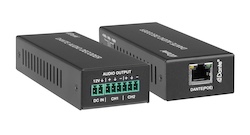
Specifying an HDMI Distribution System: Splitters, Matrices, Scaling Switchers and Dante Audio Short answer: Choose the device by the shape of the…
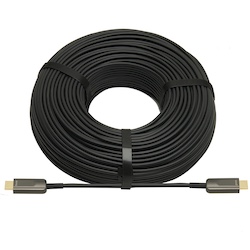
If your source is component video (the red, green, and blue RCA connectors), you need a component to HDMI converter. If it is composite video (a…
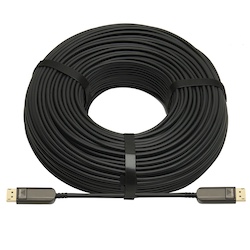
DisplayPort beats HDMI for high-refresh PC monitors and daisy-chaining; HDMI is the pick for TVs, consoles and projectors, and USB-C for laptops.
KanexPro sells direct to dealers, resellers, installers and integrators, and through distribution. Whichever way you buy, the same engineers answer the phone.
The trade store: your own account, live stock, reordering, and a first look at new products.
Go to the trade store →Distribution and authorised resellers across the US and beyond.
See where to buy →Design help on extenders, matrix and AV over IP before you spec it.
Ask an engineer →